

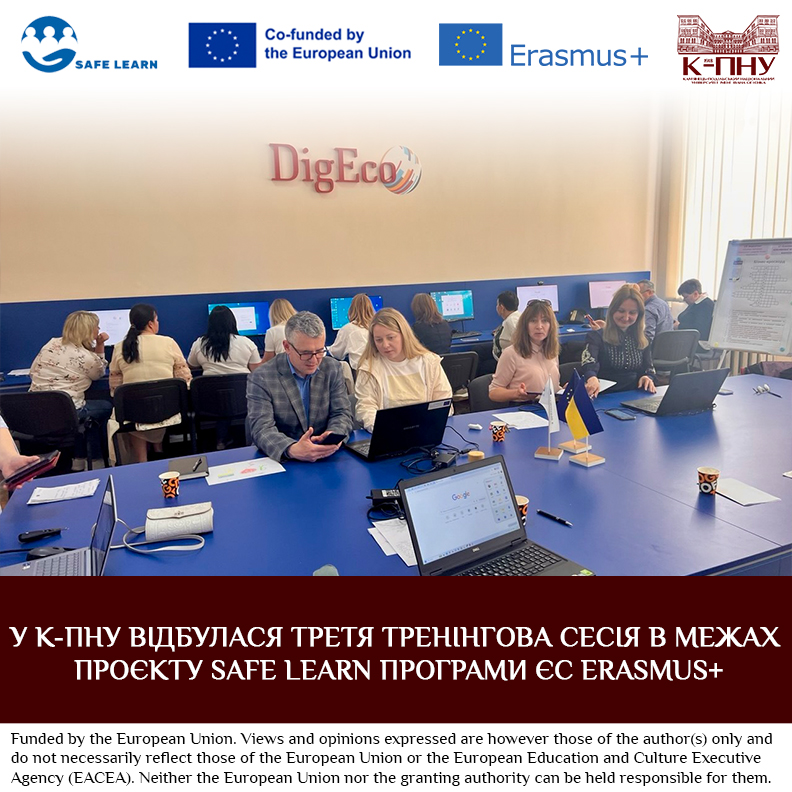
On 22 May 2026, within the framework of the international Erasmus+ project “SAFE LEARN: Supporting Adaptive and Flexible Education for War-Affected Students in Ukraine” (101236049 — SAFE LEARN — ERASMUS-EDU-2025-CBHE), the third training session for facilitators entitled “Using Digital Tools to Organize an Interactive and Effective Educational Process” was held at the Digital Economy Laboratory (Room 210) of Kamianets-Podilskyi Ivan Ohiienko National University.
The trainers for the first part of the event were Yulia Danchuk, PhD in Psychology, Associate Professor, Associate Professor in the Department of General and Practical Psychology, and Oksana Lohvina, PhD in Psychology, Associate Professor, Associate Professor in the Department of General and Practical Psychology.
Participants mastered methods of combining digital technologies with psychological support for students, in particular learning how to integrate emotional stabilization as an important prerequisite for further cognitive activity. A practical outcome of the training was the improvement of educational design skills: participants learned to create concise, structured, and comprehensible content that helps reduce stress levels while increasing engagement and learning effectiveness.
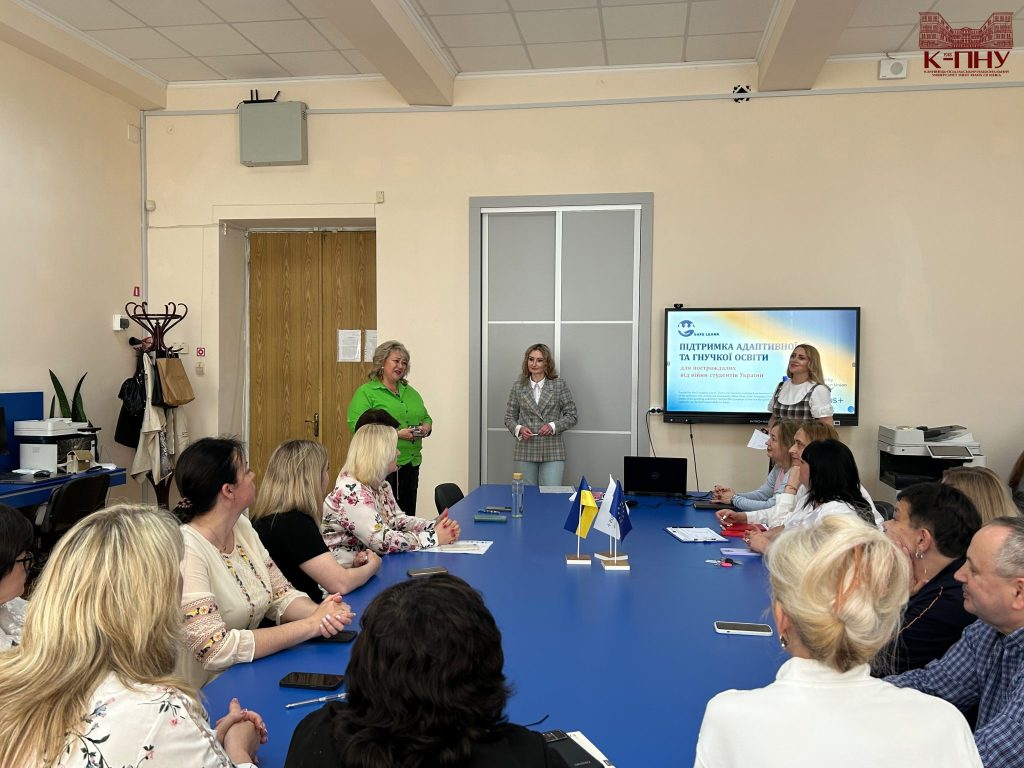
The trainers of the second part of the training session were Olha Savitska, PhD in Psychology, Associate Professor, Associate Professor in the Department of General and Practical Psychology, and Nataliia Didyk, PhD in Psychology, Associate Professor, Associate Professor in the Department of General and Practical Psychology.
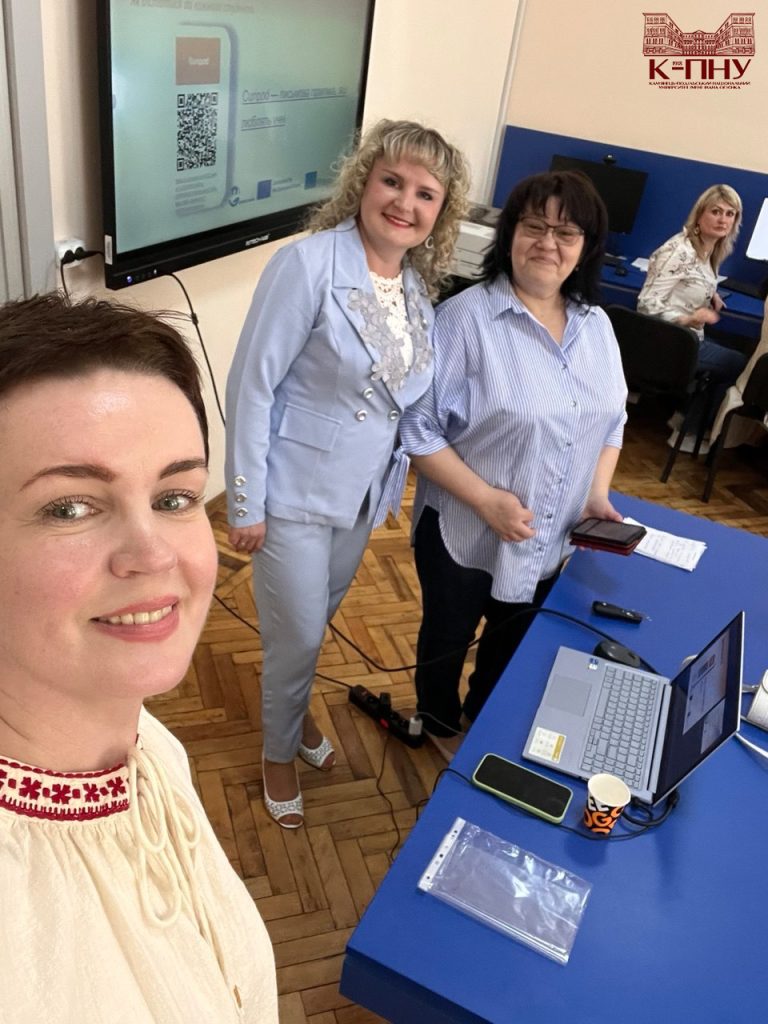
During the second part of the training session, participants were introduced to the specific features of using digital tools to ensure an interactive and effective educational process. In particular, the capabilities of such platforms and services as NotebookLM, Curipod, Google Vids, and Study AI were presented. The trainers emphasized the importance of scaffolding as an approach to supporting students’ learning activities.
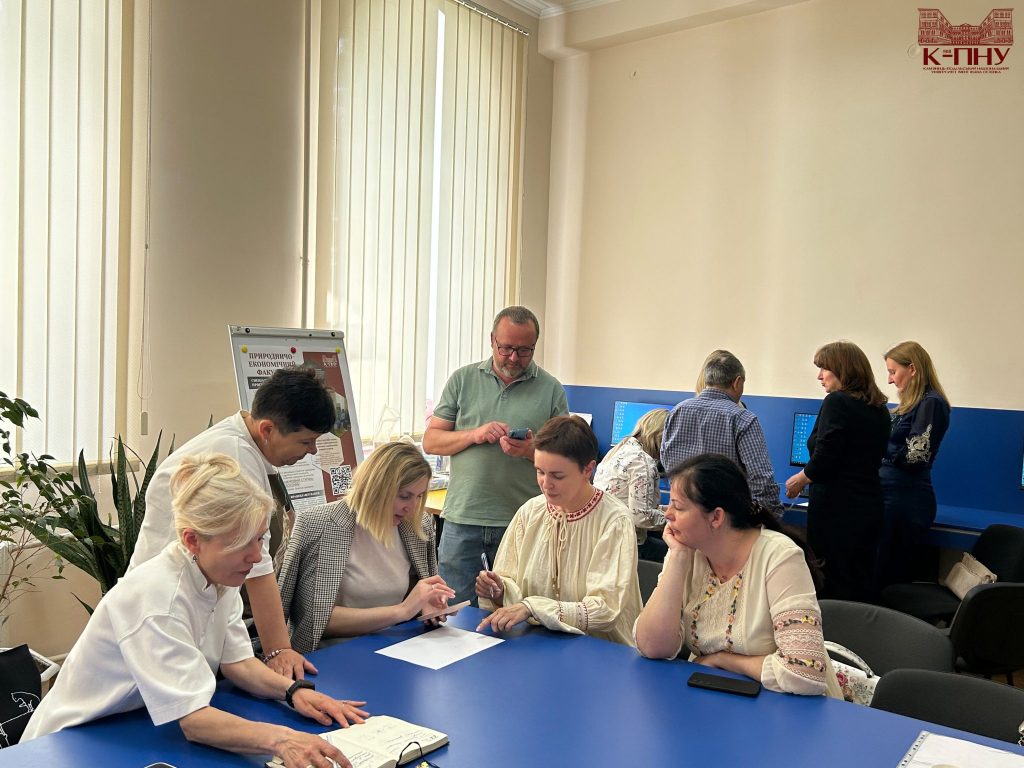
All participants had the opportunity to test digital tools in practice. They created video clips and memes related to scientific terms, worked with texts, and improved their own presentations by supplementing them with practical cases and interactive elements.
Special attention was paid to the possibilities of NotebookLM in creating various educational products, including presentations, infographics, audio podcasts, videos, tests, and flashcards. These functions were demonstrated using documents on the principles of trauma-informed teaching that participants had studied during the first training session.
The trainers also presented the “tutor” function in the Study AI tool, which helps reduce students’ stress levels and provides a more comfortable interaction with educational materials.
SAFE LEARN Working Group